
Quick answer
Choose a perfume box by defining the complete pack: the bottle and closure it must hold, the proposed structure and insert, the material specification, the printed artwork and the distribution route. Approve the physical fit and printed result against agreed references before committing to the production version.
The options below are procurement discussion points. They are not a confirmed list of Laeyo’s available materials, equipment or finishing capabilities. Availability, specifications, quantities and feasibility require project review.
How do folding cartons, rigid boxes and inserts differ?
A folding carton is a paperboard structure designed to be cut, creased and assembled into its box form. It is worth considering when the project calls for a conventional individual retail carton. Ask about the closure, assembly method, print surface and how the bottle will be held.
A rigid box uses a more fixed construction, commonly with a covering material around a board structure. It can suit a presentation-led concept, but buyers should compare its assembled dimensions, packing method, storage volume and quoted cost rather than assuming that “rigid” alone establishes protection.
An insert positions the product inside the chosen outer structure. Ask the supplier to propose a material and geometry for the actual bottle, cap and any accessories. An insert is part of the complete packaging design; it does not replace an appropriate outer shipping pack.
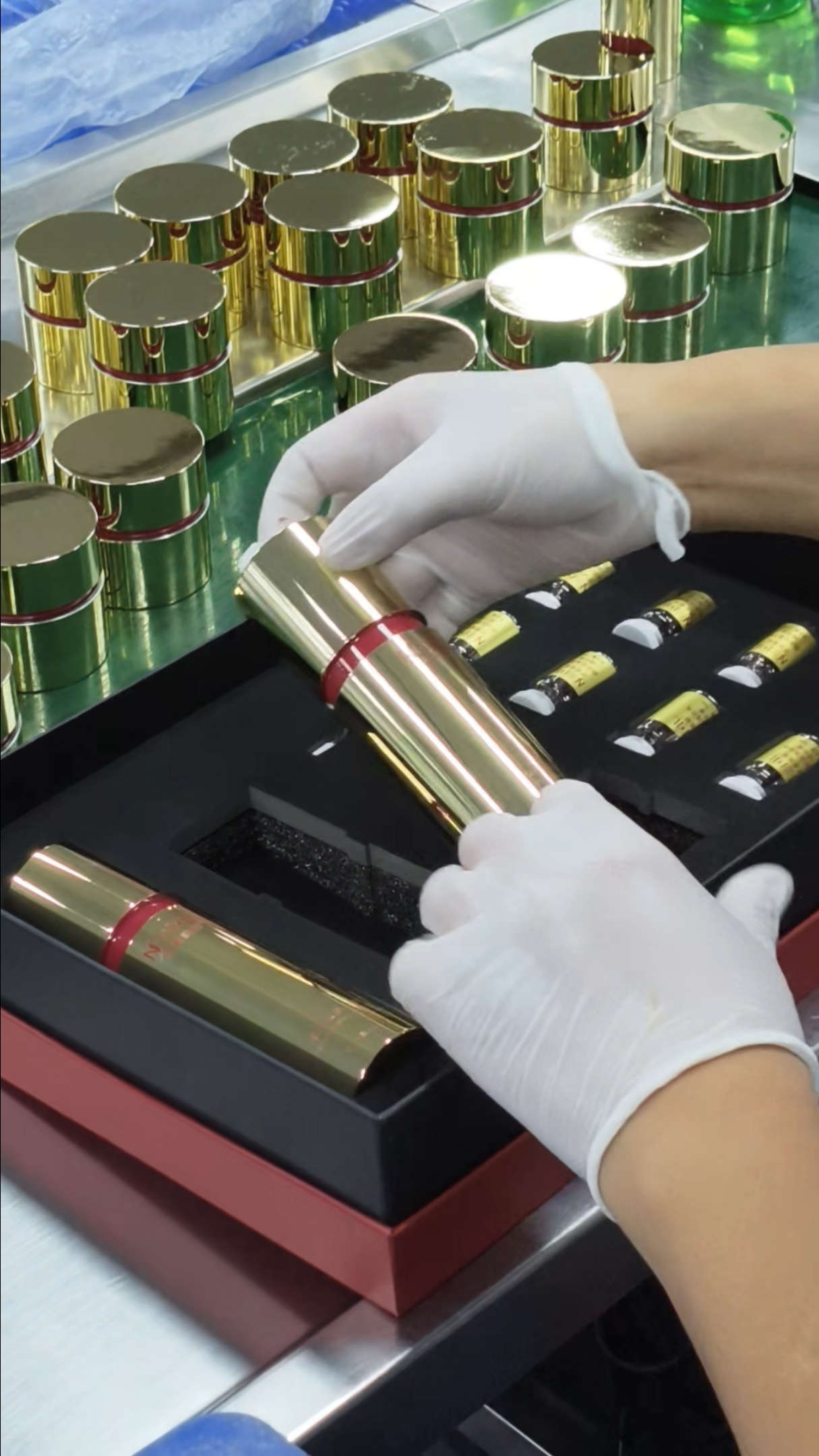
Use this assembly example to discuss the insert’s cavity layout and access for packing. For a perfume project, review the actual bottle, closure and insert sample together. This cosmetics-process photograph does not document an unprinted structural sample, print approval or load and transport testing.
For each route, ask the same questions: Does the product fit? Can it be packed consistently? Does the opening experience suit the brand? What evidence supports the proposed distribution protection? What changes in the quote and schedule?
Which material details should be specified?
Request the material grade or description, thickness or caliper, any stated grammage, surface finish and intended printing process. Ask which properties matter for this particular design. Do not select a board only by its weight figure or assume two boards with the same grammage perform identically.
Use a physical material reference where appearance is important. White tone, texture and surface finish can affect the visible result. Confirm the supplier’s proposed material and process combination.
Which printing and finishing options should be discussed?
Ask the packaging supplier which print process it proposes for the artwork and order quantity. Specify the intended colors and how they will be approved. If the design uses foil, embossing, debossing, varnish or a laminated surface, request confirmation of feasibility on the selected structure and material.
For each proposed finish, ask what sample will demonstrate the result, whether separate tooling is required and what artwork information is needed. Do not assume a screen image can establish the final color, texture or reflective effect.
Keep essential text and product identification clear in the final design. Have the responsible reviewer approve destination-specific label content before printing; this article does not establish legal labeling requirements.
What should be checked on the dieline and samples?
Start with the actual component dimensions, including the closure and intended insert. Ask the packaging supplier to supply or approve the production dieline. Mark folds, cuts, glue areas and the orientation of the artwork clearly.
Use an unprinted structural sample to review fit, opening, closure and assembly. Check whether the bottle can be inserted and removed as intended and whether the cap or decoration is exposed to unwanted contact.
Use the agreed printed sample or proof to review artwork revision, text, color reference and finishing. Record which features it represents accurately and which still require production approval. One proof should not silently stand in for every structural and print check.
How should transport protection be reviewed?
Review the finished product together with its insert, retail box, outer carton and any other shipping protection. Define the intended distribution route and what counts as acceptable performance.
Ask a qualified packaging provider or laboratory to recommend a suitable test approach. ISTA’s test procedure guidance distinguishes early screening tests from simulations associated with shipment types. Selection should match the pack and distribution objective. No universal drop height or test claim is implied here.
Agree how damage, leakage, movement and appearance will be assessed. A visually attractive retail box alone is not evidence of satisfactory transport performance.
What should a perfume box RFQ include?
Send the bottle and closure references, product dimensions, requested box quantity by artwork version, structural direction, insert requirements, artwork files, finishing preferences, destination and target timing. Ask for quoted alternatives when the material or structure is undecided.
Laeyo’s perfume MOQ is 1,000 bottles; that fact does not establish a standalone box MOQ or the accepted allocation across artwork versions. Those details need project confirmation.
Use these details to prepare a perfume box RFQ, and contact Laeyo for a B2B OEM/ODM development discussion. Email [email protected] or WhatsApp +85269176570.