
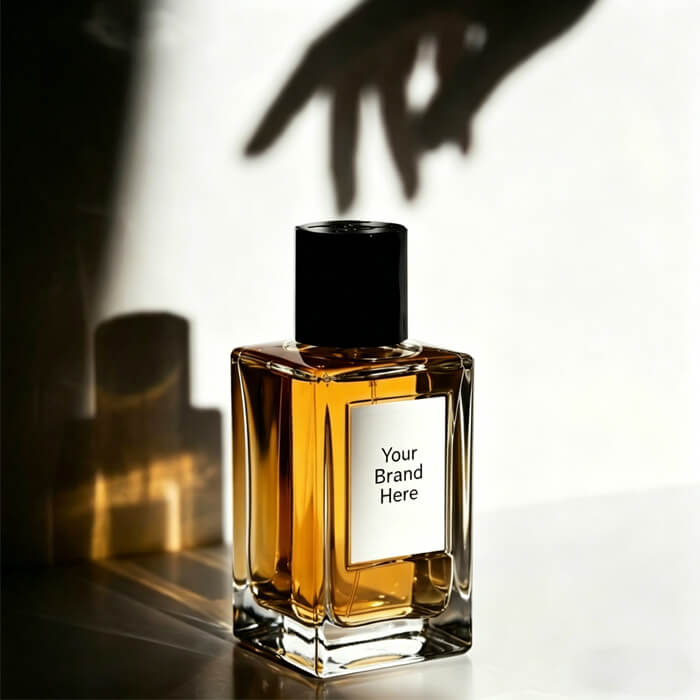
Start here for the complete fragrance-brand roadmap: define the market and brief, select a development route, evaluate samples and packaging, then approve the evidence and commercial terms needed for production. The sections below link to focused tools rather than treating a general guide as a project approval.
Plan and verify these work areas:
- A clear brand positioning
- The right fragrance development strategy
- Reliable packaging solutions
- A professional manufacturing partner
- Quality control and compliance support
- A production process that can scale with your business
A contract manufacturing route lets a brand discuss outsourced development and production rather than building a facility. Confirm the actual team, site, services and responsibilities; outsourcing does not remove the brand’s applicable duties.
This is the main overview. The supplier-readiness checklist focuses on procurement gates; the five-minute preparation page helps assemble a first inquiry.
1. What Is Private Label Perfume?
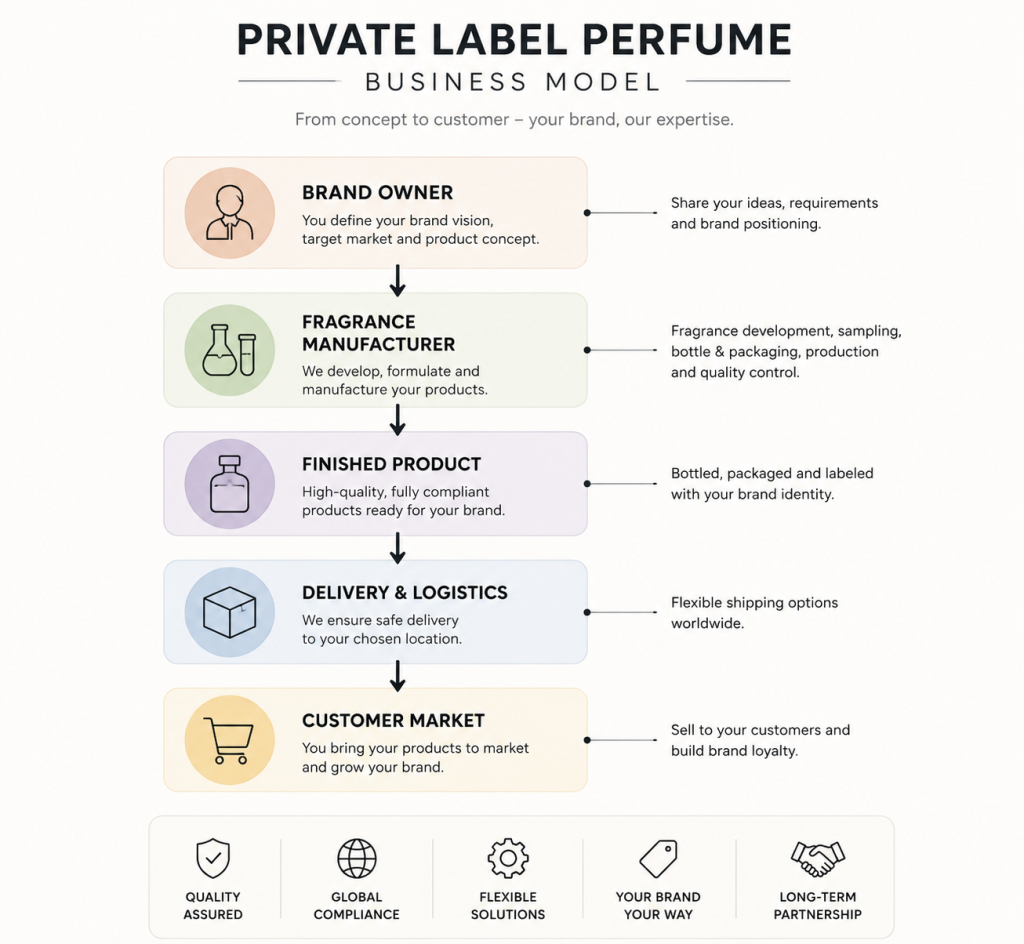
Private-label proposals involve products made for another business’s brand, but the exact scope and rights vary. LAEYO works with B2B OEM/ODM development references; it does not offer ready-made finished-fragrance stock or its own consumer brand.
Confirm which tasks are included in the proposed route:
- Fragrance development
- Formula adjustment
- Bottle selection
- Packaging production
- Filling and assembly
- Quality control
- Documentation support
Agree who controls and approves these brand decisions:
- Brand identity
- Product positioning
- Target customers
- Packaging style
- Marketing strategy
Record the commercial, technical and market responsibilities in the project plan and agreement rather than assuming one provider handles everything.
Who Usually Works With Private Label Perfume Manufacturers?
Potential buyers may include:
- New perfume brands
- Beauty startups
- Boutique retailers
- E-commerce brands
- Influencer-led brands
- Cosmetic companies expanding into fragrance
- Distributors seeking defined supply and rights terms
The actual division of work, deliverables and approvals should match the brand’s resources and intended markets.
2. Private Label vs OEM vs ODM Perfume Manufacturing
When researching perfume suppliers, you may see the terms Private Label, OEM, and ODM.
These are commercial labels, not automatic rights or fixed service packages. For detailed terminology, see private label versus OEM versus ODM.
| Route label | Working scope to clarify | Question to resolve |
|---|---|---|
| Private label | Existing development reference and branding scope | What changes, evidence and rights are offered? |
| OEM | Execution from accepted customer inputs | Are files/materials authorized and technically usable? |
| ODM | Agreed development support plus production scope | Who develops, evaluates, approves and owns/licenses the output? |

Private Label Perfume
An existing reference can be one route to assess; it is not automatically the easiest, fastest or cheapest option.
A brand may choose:
- Existing fragrance directions
- Stock bottle options
- Standard packaging structures
Then customize:
- Label design
- Brand identity
- Outer packaging
- Product positioning
OEM Perfume Manufacturing
OEM discussions can begin with customer-supplied inputs whose scope and authorization must be checked.
The brand may provide:
- Target scent profile
- Product specifications
- Packaging requirements
- Market requirements
Confirm which execution, assessment and release tasks the manufacturer accepts.
ODM Perfume Manufacturing
ODM discussions include the development support actually offered in the proposal.
The manufacturer may assist with:
- Fragrance concept development
- Product recommendations
- Packaging solutions
- Manufacturing feasibility
A project may combine elements of these routes. Use the OEM/ODM responsibility guide to assign tasks, rights and change approval.
3. How The Fragrance Development Process Works
Use the following stages as a planning route. Exact methods, parallel work and any required trials depend on the actual product and evidence.
Identify inputs, deliverables and approval authority at each stage:
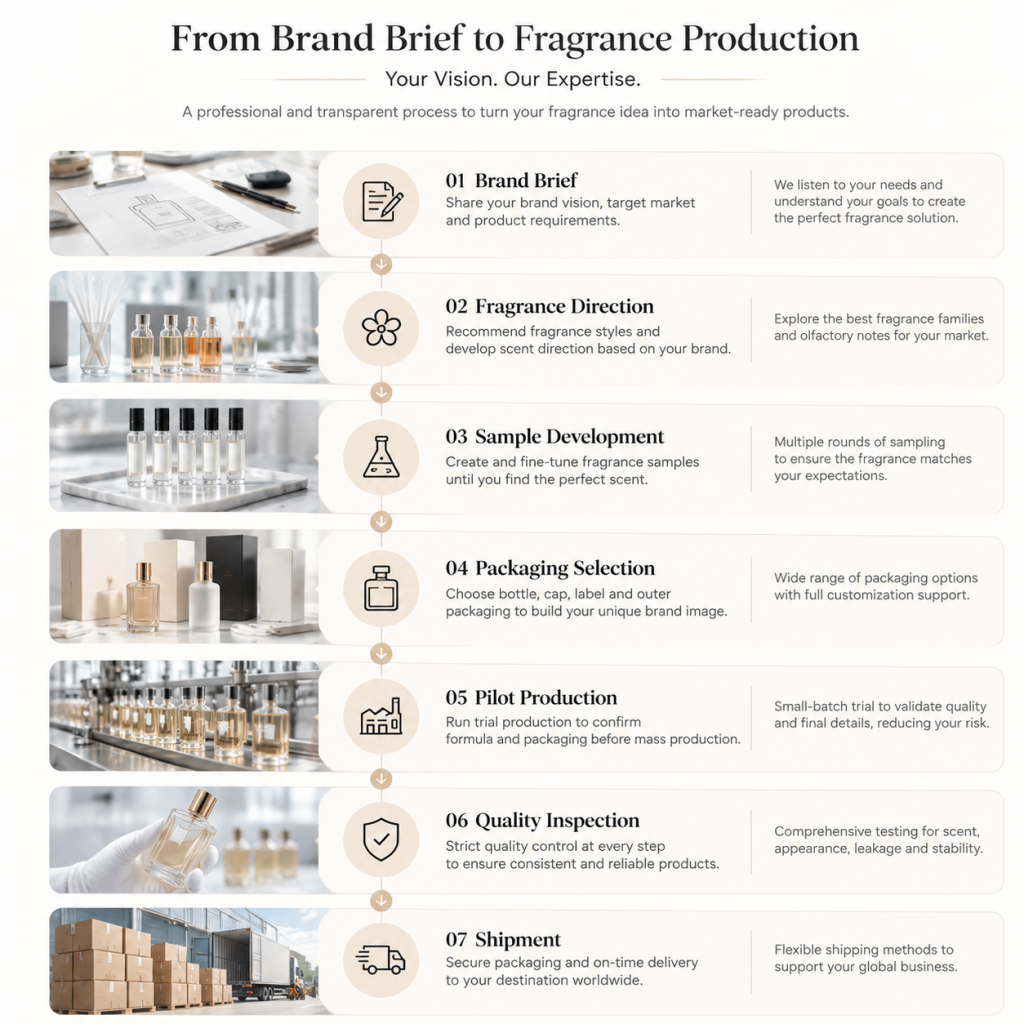
Step 1: Brand Brief and Product Planning
The process starts with understanding:
- Target customers
- Brand positioning
- Price range
- Market
- Product format
- Desired fragrance direction
Use the aroma brief module to record sensory references and evaluation goals alongside quantity, pack, market and cost inputs.
Step 2: Fragrance Direction Development
The brand and manufacturer define:
- Fragrance family
- Key notes
- Product style
- Market positioning
Examples:
- Fresh citrus
- Floral directions
- Woody directions
- Amber directions
- Gourmand
- Fresh or airy sensory effects; any ingredient or safety claim needs separate evidence
Step 3: Sample Development
Agree the sample scope, variants, formula/pack identity and evaluation method before development. LAEYO’s sample R&D reference is approximately three days, excluding communication, confirmation waits and shipping.
The brand evaluates:
- Scent performance
- Emotional feeling
- Brand fit
- Market suitability
Consolidate feedback against the agreed criteria, then assess proposed changes. Confirm included rounds, fees and approval; revisions are not unlimited or guaranteed to reach a perfect result. Use the sample evaluation and approval guide.
Step 4: Packaging Confirmation
Coordinate packaging with formula work as the project permits. Confirm the actual components and their approval evidence:
- Bottle
- Cap
- Sprayer
- Label
- Box
- Packaging decoration
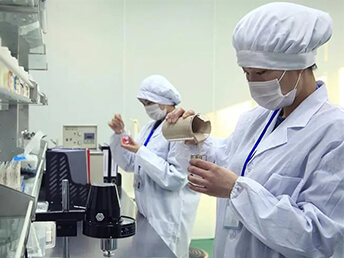
Step 5: Production and Quality Control
Begin each production stage only after its agreed prerequisites are met; record the required technical and release decisions:
- Raw material preparation
- Fragrance blending
- Filling
- Assembly
- Inspection
- Packaging
- Shipment
4. Choosing Your Fragrance Direction
Fragrance is not only a scent. It is part of your brand identity.
Before developing a perfume, brands should consider:
Target Customer
Ask:
- Who will buy this product?
- What lifestyle does the brand represent?
- What emotional experience should the fragrance create?
Example:
Illustrative positioning hypotheses to research, not fixed requirements:
- Sophisticated notes
- Premium packaging
- Elegant storytelling
Other hypotheses to compare for a lifestyle or social-commerce route:
- Easy-to-understand scent profiles
- Trend-driven fragrances
- Accessible pricing
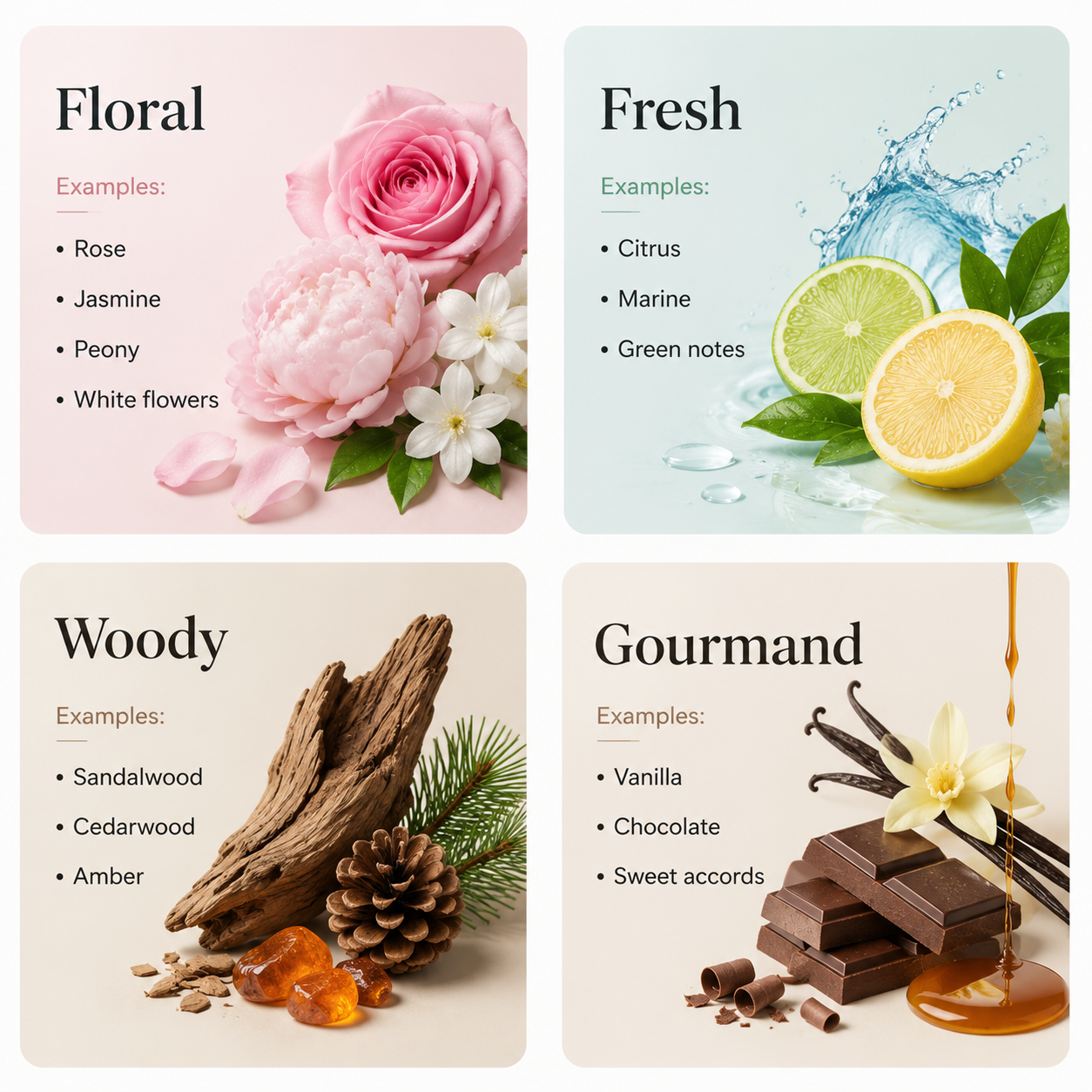
Fragrance Families
Common fragrance directions include:
Floral
Examples:
- Rose
- Jasmine
- Peony
- White flowers
Fresh
Examples:
- Citrus
- Marine
- Green notes
Woody
Examples:
- Sandalwood
- Cedarwood
- Amber
Gourmand
Examples:
- Vanilla
- Chocolate
- Sweet accords
Treat note names as sensory language rather than proof of particular ingredients. Have the development team assess feasible options and evaluate actual samples.
5. Bottle and Packaging Options
Packaging plays an important role in fragrance branding.

A perfume product usually includes:
- Bottle
- Cap
- Pump/sprayer
- Label
- Folding carton
- Gift packaging
Stock Bottle vs Custom Bottle
| Comparison field | Existing bottle design | Custom design |
|---|---|---|
| Availability / preparation | [Actual quote and sample schedule] | [Actual tooling and sample schedule] |
| Cash / tooling rights | [Charges, ownership/use rights] | [Charges, ownership/use rights] |
| Minimums / surplus | [Component and order terms] | [Component and order terms] |
| Appearance / performance | [Physical sample and relevant evidence] | [Physical sample and relevant evidence] |
Use the existing-bottle versus custom-mold guide to compare actual options rather than assuming a fixed cost or speed ranking.
A distinctive design must still be assessed for fit, function, rights, cost and the intended audience’s response.
6. MOQ Considerations
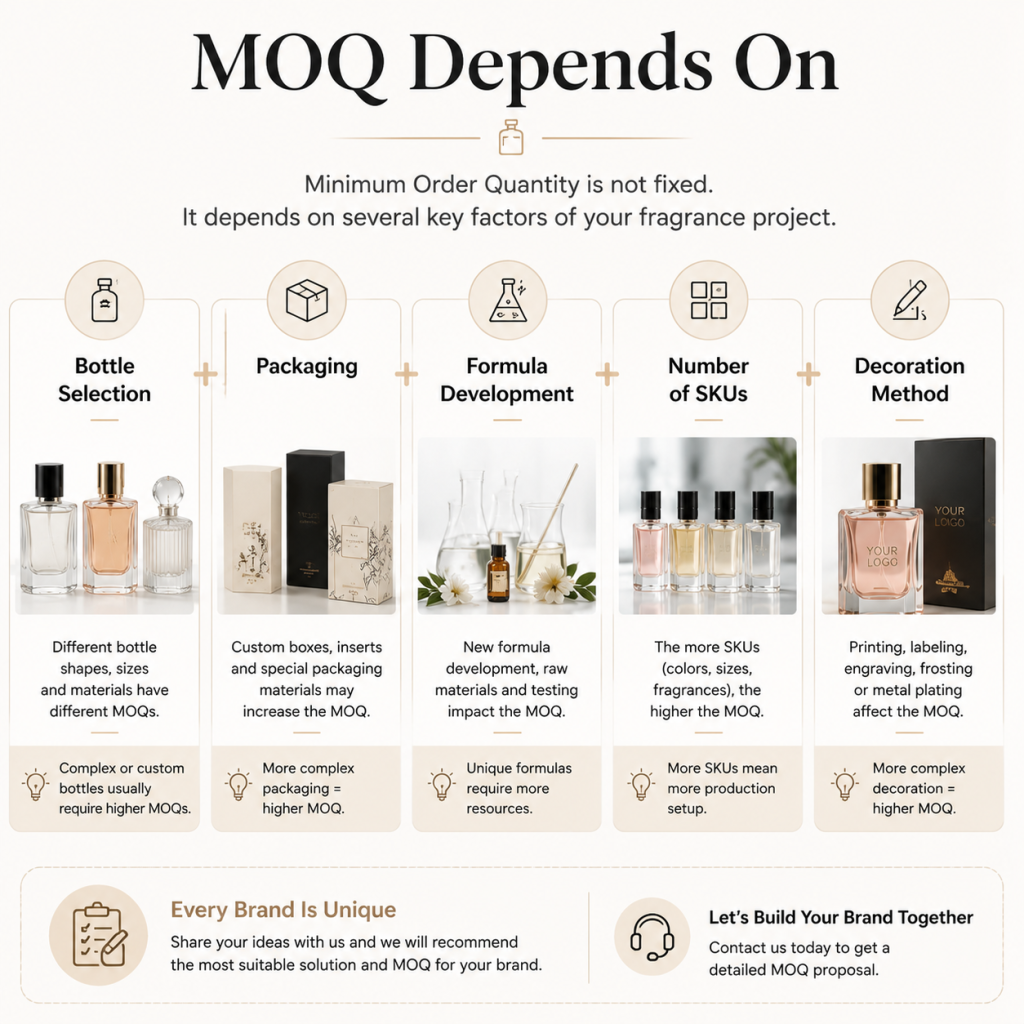
MOQ means Minimum Order Quantity.
One of the most common questions from new fragrance brands is:
How many perfume bottles do I need to order?
LAEYO’s confirmed perfume MOQ is 1,000 bottles. Scent/SKU allocation and other-format minimums need project confirmation.
MOQ can be influenced by:
- Bottle selection
- Formula development
- Number of fragrances
- Packaging customization
- Decoration methods
- Production requirements
Component, decoration and process minimums can create separate purchasing commitments. Ask the importer MOQ questions before assuming a mixed-scent allocation or staged delivery is accepted.
Instead of choosing a supplier only based on the lowest MOQ, brands should evaluate:
- Manufacturing capability
- Product quality
- Communication
- Documentation support
- Long-term scalability
7. Sampling Process
Use sampling to answer defined project questions before the next commitment.
A typical fragrance sampling process includes:

1. Initial Brief
The brand provides:
- Fragrance preference
- Market positioning
- Reference products
- Target customer
2. Sample Creation
The manufacturer develops samples based on the project direction.
3. Evaluation and Feedback
The brand reviews:
- Scent character
- Strength
- Balance
- Brand suitability
4. Sample Approval
Identify the approved reference and version, remaining evidence and person authorized to advance the project. Sensory approval alone does not complete technical or market review.
The sample fee is fully credited against bulk perfume orders of at least 1,000 bottles; confirm other charges and shipping separately. Document feedback and decisions without assuming communication alone shortens the schedule.
8. Production and Quality Control
Define the manufacturer’s quality responsibilities and the brand’s acceptance/release roles in the project plan.
Select relevant methods, samples and limits for the actual formula and pack; possible check areas include:
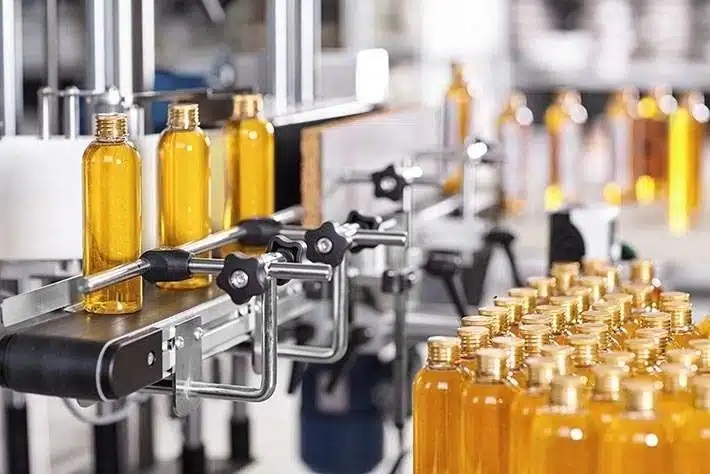
Incoming Material Inspection
Checking:
- Raw materials
- Packaging components
- Supplier documentation
Production Control
Monitoring:
- Formula accuracy
- Filling process
- Assembly quality
Finished Product Inspection
Checking:
- Appearance
- Leakage
- Spray performance
- Packaging quality
- Batch consistency
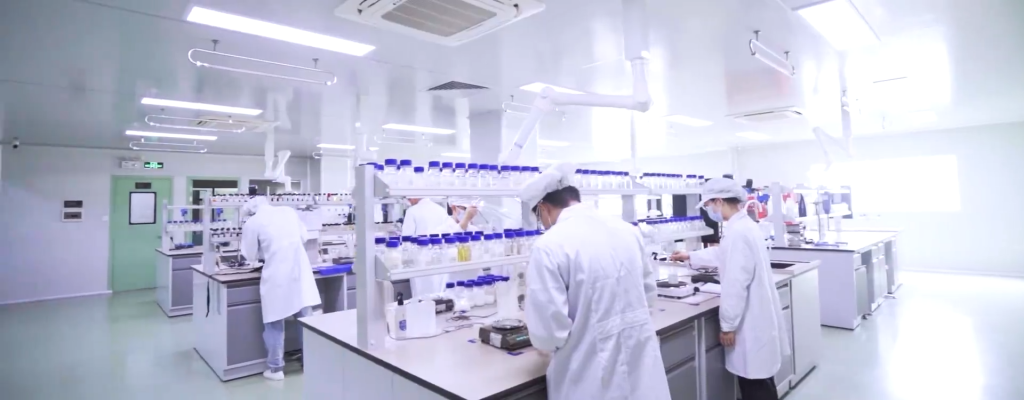
Request the records supporting the selected scope. The quality and sample-consistency page and golden-reference to bulk guide explain questions to bring into the review. No image or generic checklist proves a batch passed.
9. Compliance Documents for Fragrance Products

Have qualified reviewers identify the current requirements for the actual product, use, claims and markets. Use the import-document navigation page to ask the correct party for each record.
Examples of distinct record types:
IFRA Documentation
IFRA supplier conformity information relates to the specified mixture and use; it is not issued by IFRA and does not replace finished-product safety assessment or law.
SDS (Safety Data Sheet)
An SDS conveys specified hazard/handling information within its scope; confirm applicability and shipment needs with the responsible parties.
COA (Certificate of Analysis)
A CoA records selected results or conformity for an identified batch/specification. It is not a general market approval.
Product Specifications
Product specifications describe important product characteristics and requirements.
Assign the available supplier support and the work required from qualified market or logistics reviewers. Do not assume one document pack covers every destination.
10. How To Choose A Private Label Perfume Manufacturer

Selecting the right manufacturing partner is one of the most important decisions when starting a fragrance brand.
Before placing an order, consider:
1. Manufacturing Experience
Look for:
- Years of fragrance manufacturing experience
- Product categories
- Export experience
2. Development Capability
Ask which development tasks and resources are actually available:
- Fragrance direction
- Sampling
- Packaging solutions
- Product improvement
3. Quality System
Ask about:
- Quality procedures
- Testing methods
- Documentation
4. Communication
Define decision owners and records to address:
- Misunderstood specifications
- Delayed samples
- Packaging mistakes
5. Long-Term Partnership
Review actual capability and terms for each proposed later change:
- First product launch
- New SKU development
- Packaging upgrades
- Larger production volumes
Final Thoughts
Use the roadmap below to keep evidence, decisions and commitments aligned. This overview does not establish a safe formula, available component or accepted deadline.
Use this overview to identify the next decision, then follow the focused guide for that topic. Bring the known inputs and remaining questions together in one first-inquiry brief.
Stage Deliverables and Release Owners
| Stage | Deliverable | Who must approve the stated scope |
|---|---|---|
| Brief / feasibility | Versioned request, assumptions and quote scope | Brand decision owner + supplier scope reviewer |
| Sample / formula | Identified reference, feedback, formula/version and remaining gaps | Brand sensory approver + responsible technical reviewer |
| Packaging | Drawings, artwork, full assembly sample and applicable results | Brand/artwork owner + packaging/quality reviewer |
| Market / safety documents | Applicable evidence, labels/claims and responsibilities | Qualified assessor/reviewer and applicable responsible party |
| Pilot / process where required | Actual conditions, results, deviations and representativeness | Named technical/quality authority |
| Order / bulk release / shipment | Accepted commercial terms, batch/release records and route readiness | Authorized commercial, quality-release and logistics owners |
These are role fields, not evidence of completed signatures. Your next action is to complete the first-inquiry RFQ worksheet and submit it through the project contact page.
Frequently Asked Questions
How much does it cost to start a perfume brand?
The cost depends on fragrance development, packaging choices, order quantity, product positioning, and market requirements.
Can I create my own perfume without a factory?
Yes. Many brands work with private label perfume manufacturers instead of building their own production facilities.
What is the MOQ for private label perfume?
LAEYO’s confirmed perfume MOQ is 1,000 bottles. Confirm scent/SKU allocation, components and other-format requirements for the actual project.
How long does perfume development take?
Confirm the actual development, study, approval, component, production and transport route. Approximate three-day sample R&D excludes communication, confirmation waits and shipping, and is not the total lead time.
What documents are needed for perfume products?
Document needs depend on the actual product, market and shipment. Use the document navigation guide to distinguish supplier, batch, safety, filing and logistics records.