Perfume OEM/ODM Services

Perfume OEM and ODM Services for Private Label Brands

Laeyo Fragrance helps fragrance brands, importers, distributors, and retailers move from scent direction, packaging, and sampling to bulk production, quality-control checkpoints, and export-order preparation.

Private Label Perfume Perfume OEM Custom ODM Scent Development Packaging Sampling Bulk Production
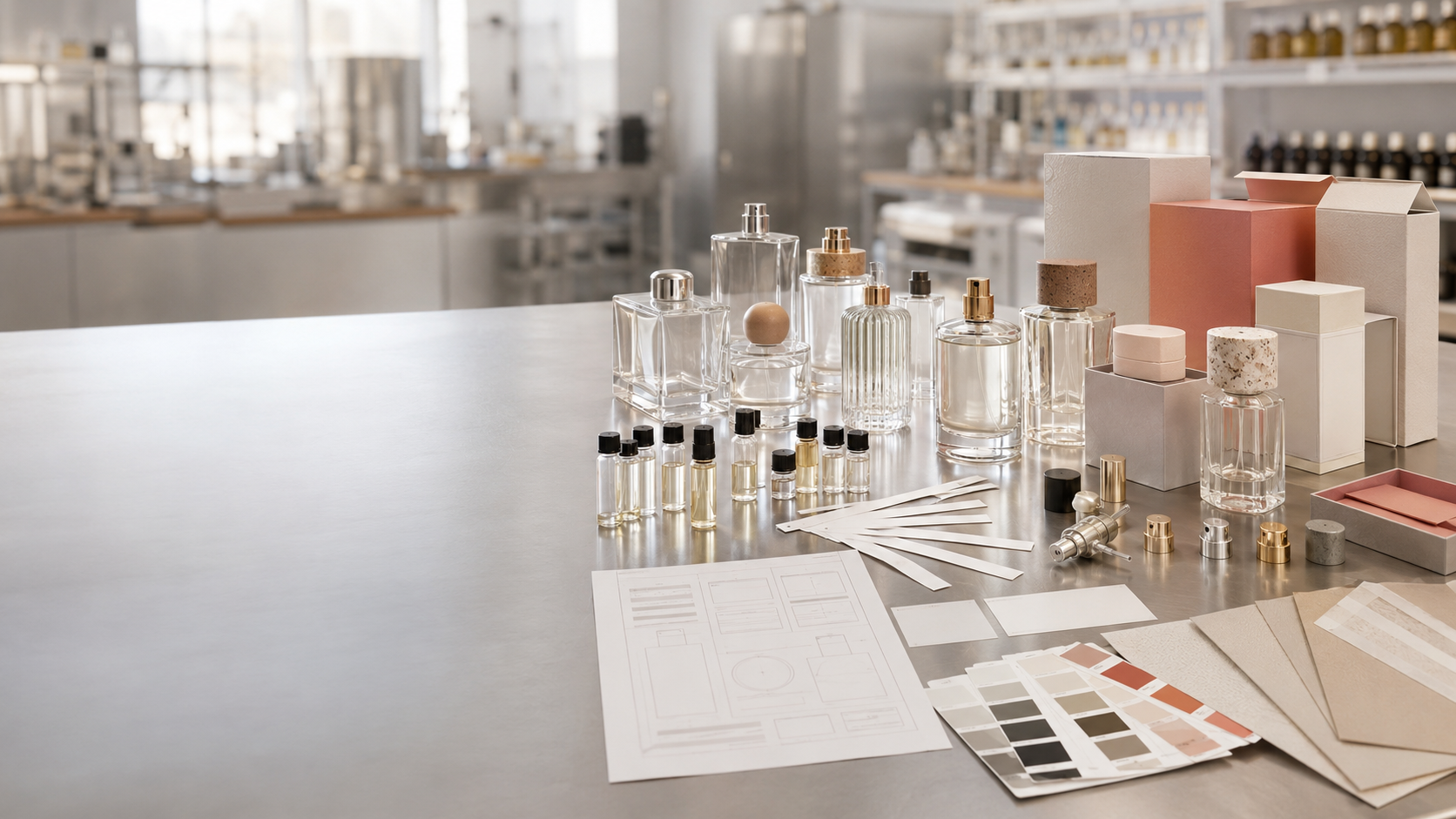
Perfume OEM and ODM project development workspace with fragrance bottles, sample vials, packaging prototypes, labels, and scent review materials

Choose Your Project Route

Find the cooperation model that matches your fragrance brief

Use these routes to decide what to send first and how Laeyo can organize the next project step.

Private Label

Best for
Brands, retailers, importers, or distributors that want to launch fragrance products under their own brand with a practical route.
Buyer provides
Brand direction, target market, product type, bottle or packaging references, estimated quantity, and launch timing.
Laeyo supports
Scent direction, bottle and packaging discussion, samples, filling, packing, QC checkpoints, and export preparation.
Typical next step
Share your product idea and preferred packaging route for a project-specific review.
Send This Project Route

Custom ODM Development

Best for
Buyers with a brand concept, customer profile, price position, or scent mood who need help turning the idea into samples.
Buyer provides
Audience, fragrance mood, commercial positioning, product category, packaging preference, and sample expectations.
Laeyo supports
Scent-family discussion, product-format suggestions, packaging direction, sample coordination, and production planning.
Typical next step
Send the concept, market, and reference direction so the sample path can be organized.
Send This Project Route

OEM / Contract Production

Best for
Buyers with clearer sample references, formula direction, artwork, packaging files, or production requirements.
Buyer provides
Reference sample, product specifications, artwork files, component requirements, quantity range, destination, and schedule.
Laeyo supports
Material coordination, filling and assembly planning, quality checkpoints, packing details, and shipment preparation.
Typical next step
Send your specification or approved references for production-route and MOQ review.
Send This Project Route

OEM vs ODM Comparison

Compare buyer input, Laeyo delivery, and the next action

OEM and ODM are not just labels. The difference is how clear the brief is when the project begins and which decisions need to be organized before samples or production.

Private Label, OEM and ODM names do not determine intellectual property ownership, responsibility for formula or packaging changes, or exclusivity. Confirm formula and packaging rights, revision responsibilities and costs, and the availability and terms of existing or exclusive solutions in the project contract before work begins.

OEM and ODM service responsibilities by buyer starting point
RouteBest Starting PointBuyer ProvidesLaeyo DeliversConfirm in the Project ContractNext Step
Private Label Brand-owned fragrance products using a defined or semi-defined market direction. Brand name, target buyer, product type, packaging preference, quantity, and timing. Scent, bottle, label, box, samples, production planning, QC checkpoints, and export communication. Confirm rights to any existing fragrance formula and packaging design, permitted changes, revision approval and costs, and whether any option is exclusive. Request a private label project review.
Custom ODM A concept needs to become a scent, product format, packaging route, and sample plan. Audience, scent mood, market position, product category, references, and target cost direction. Fragrance direction, product-route suggestions, packaging options, samples, and bulk-production planning. Agree ownership or usage rights for newly developed formulas and packaging, who handles and approves revisions, related costs, and any exclusivity scope. Send the concept and sample expectations.
OEM / Contract Production The buyer already has clearer samples, files, specifications, or packaging requirements. Reference sample, formula or product direction, artwork, components, quantity, destination, and schedule. Production organization, material coordination, filling, assembly, QC, packing, and shipment preparation. Confirm rights to buyer-supplied formulas, artwork and packaging, who authorizes or performs changes, revision costs, and any restrictions on shared or exclusive solutions. Send specifications for MOQ and production-route review.

Product Scope

Core fragrance formats for OEM/ODM discussion

Focus the first RFQ on the product format, scent direction, packaging route, quantity range, and destination market.

Private Label Perfume

Develop custom fragrance, bottle, packaging, label, filling, QC, and export-ready perfume products under your own brand.

Brand Launch Scent Bottle Box

In your Contact message, mention your Private Label Perfume project and requirements.

Eau de Parfum

Plan EDP fragrance development with project-specific scent and performance targets, bottle options, packaging customization, and export support.

EDP Retail Premium Direction

In your Contact message, mention your Eau de Parfum project and requirements.

Body Mist

Develop fresh, accessible body mist collections for retail, youth, seasonal, and promotional fragrance programs.

Daily Use Fine Mist Seasonal

In your Contact message, mention your Body Mist project and requirements.

Perfume Oils

Develop concentrated perfume oil formats for retail, gifting, wholesale, and promotional fragrance programs with private label presentation.

Oil Based Roll-On Compact

In your Contact message, mention your Perfume Oils project and requirements.

Perfume Gift Sets

Develop retail-ready fragrance bundles with bottles, boxes, inserts, sleeves, accessories, and coordinated packaging.

Gift Ready Sets Inserts

In your Contact message, mention your Perfume Gift Sets project and requirements.

Unisex Fragrance

Create balanced fragrance ranges with fresh, woody, citrus, tea, musk, amber, and minimalist scent directions.

Modern Shared Appeal Minimal

In your Contact message, mention your Unisex Fragrance project and requirements.

Other scented formats such as hair mist, reed diffuser, room spray, car fragrance, solid perfume, and linen spray can be discussed after the product use, formula direction, packaging, quantity, and target market are clear.

MOQ / Sample / Cost / Lead Time

What affects your perfume OEM/ODM quotation?

These buying decisions are reviewed by project, so the first useful step is to send the assumptions that affect MOQ, samples, timing, and cost.

Factors that affect fragrance MOQ, sample route, cost, and lead time
Decision AreaWhat Affects ItWhat Buyers Should Prepare
MOQPerfume bulk orders start at 1,000 bottles. Other product formats and final project requirements are reviewed separately, including components, packaging, scent count, and production setup.Product type, capacity, scent count, packaging route, estimated quantity, and target market.
Sample RouteExisting scent, buyer reference, new scent direction, bottle samples, packaging samples, and feedback rounds.Scent references, target customer, bottle or box references, sample expectations, and approval contact.
Sampling TimeSample R&D takes approximately 3 days, excluding client communication, confirmation waits, and shipping. Packaging sample scope, dispatch, and delivery timing are confirmed separately.Required sample type, fragrance direction, packaging files, review timeline, and shipping information.
Production Lead TimeMaterial preparation, quantity, artwork approval, testing needs, production schedule, packing, and shipment preparation.Confirmed order scope, approved samples, artwork, destination, document needs, and target launch window.
Cost StructureFormula, fragrance concentration, bottle, cap, pump or sprayer, label, box, filling, QC, packing, documents, and shipping route.Target price position, packaging level, quantity range, destination, and required documents.

Perfume bulk orders start at 1,000 bottles. MOQ for other product formats, final project requirements, pricing, and production lead time are confirmed after reviewing the brief.

6-Step OEM/ODM Process

From fragrance brief to shipment-ready preparation

Each step connects buyer input with Laeyo output so the project can move toward samples, approval, production, QC, and export communication.

  1. 01

    Project Brief

    Buyer input: Target market, product type, quantity range, scent direction, packaging needs, timing, and destination.

    Laeyo output: Initial project route, practical information gaps, and next-step plan.

    Stage result: A clearer RFQ brief for route, MOQ, sample, and cost review.

  2. 02

    Scent & Product Direction

    Buyer input: Scent mood, fragrance family, references, customer profile, concentration direction, and product format.

    Laeyo output: Scent direction discussion, product-format suggestions, and sampling path organization.

    Stage result: Agreed scent and product direction for sample preparation.

  3. 03

    Packaging and Component Planning

    Buyer input: Bottle size, material, cap, pump, sprayer, label, decoration, outer box, insert, and carton needs.

    Laeyo output: Component and packaging coordination according to availability, process, quantity, and target cost.

    Stage result: Packaging route and material assumptions ready for sample or quotation.

  4. 04

    Sample Development and Approval

    Buyer input: Sample feedback, revision instructions, approval contacts, packaging comments, and delivery details.

    Laeyo output: Sample preparation, adjustment communication, and approval-reference organization.

    Stage result: Approved scent, appearance, packaging, and project notes for production planning.

  5. 05

    Bulk Production and Quality Control

    Buyer input: Confirmed order scope, approved artwork, production references, destination, and quality requirements.

    Laeyo output: Material preparation, filling, assembly, label and packaging checks, appearance review, and packing checks.

    Stage result: Production records and QC checkpoints aligned with the confirmed project.

  6. 06

    Packing and Export Preparation

    Buyer input: Shipping marks, carton requirements, forwarder details, document needs, and shipment timing.

    Laeyo output: Packing preparation, carton information, export-order communication, and available document coordination.

    Stage result: Shipment-ready communication package for buyer or forwarder review.

Factory + QC + Trust Proof

Review the evidence behind your OEM/ODM project

Use these trust pages before sampling, quotation, bulk production, or document review.

Factory Capability

Review lab, filling, packing, warehouse, and production-support scenes behind fragrance orders.

View Factory Capability

Quality Control

See how sample references, components, filling, sealing, appearance, packing, and records are checked.

Review QC Checkpoints

Certifications & Compliance

Request certificates, SDS/MSDS, IFRA-related support, COA, specifications, and export-support files.

View Compliance Support

Trust Center

Verify buyer-facing information about documents, confidentiality, export preparation, and supplier review.

Visit Trust Center

RFQ Preparation

What should buyers send before requesting a fragrance OEM/ODM quote?

A complete brief helps identify the practical sample route, packaging assumptions, MOQ review, quotation path, production planning, and document needs.

Product type and capacity
Scent direction or references
Target customer and market
Estimated order quantity
Bottle, cap, pump, or sprayer preference
Label, decoration, or printing needs
Outer box or gift-set structure
Sample expectations
Target timeline or launch window
Destination country or region
Document or quality requirements
Forwarder or shipping notes

Buyer Questions

Fragrance OEM/ODM Frequently Asked Questions

Review common questions about service models, customization, samples, MOQ, timing, quality, export preparation, and project limits.

A perfume factory owns or directly controls the formulation lab, compounding, filling, and packaging lines. It can manage raw materials, batch records, stability, and QC in one location. A trading company does not manufacture; it buys from one or more third-party factories and resells to you. This means the factory can usually offer more direct customization, faster technical answers, lower markup, and stronger formulation confidentiality, while a trading company may offer broader sourcing and consolidated small orders but with less control over change management and defect investigation. In daily production, the difference shows up in sampling lead time, bottle-neck and pump compatibility, fragrance strength adjustments, and documentation. A factory can pull a lab sample, adjust viscosity/fill temperature, and coordinate filling and packaging under one roof; a trading company must relay the request and may not be able to guarantee what happened inside production. If your priority is original development, batch-to-batch consistency, and intellectual property protection, work directly with a factory. If you need very small mixed SKU trials and do not have in-market compliance support, a trading company might simplify logistics, but expect less transparency and a higher unit cost. When destination-specific documents or import responsibility affect the choice, submit an inquiry with your target market and project details.

A complete perfume RFQ should cover six blocks. First, market and commercial information: target countries, sales channel, target retail price, first order size, and launch date. Second, consumer profile: age, usage occasion, price sensitivity, and preferences for longevity, projection, natural, Vegan, or Halal. Third, product form: EDT, EDP, Extrait, Body Mist, Attar, gender positioning, capacity, concentration, and number of SKUs. Fourth, fragrance direction: preferred olfactive family, specific notes, disliked notes, and benchmark products. Fifth, packaging direction: stock bottle, semi-custom or custom mold; bottle, pump, cap, and box references; color and material; gift set or set needs; and shipping or channel display requirements. Sixth, regulatory and project information: responsible party in the target market, required documents, label language, testing requirements, and the decision maker with feedback timeline. If the project is not fully defined, mark each item as confirmed, pending assumption, or non-negotiable red line. This prevents repeated quotation loops and helps each sampling round move forward. Market-sensitive requirements such as US MoCRA, EU CPR, UK, Middle East, or SEA compliance documents depend on the destination and product details. Submit an inquiry with your target market and project details, and Laeyo will confirm the applicable documentation and responsibility structure.

Look for a manufacturer that can explain the OEM/ODM workflow from brief to bulk: feasibility, fragrance matching or R&D, sampling rounds, pilot production, filling, and quality control. Separate factory quality-system evidence from project records: request applicable batch records, CoA, SDS and stability or compatibility evidence, and relevant supplier-issued IFRA conformity information with its material, use and version scope. None alone establishes finished-product safety or market approval. Request a paid development sample based on your target profile, packaging, and application. This reveals how the factory interprets scent direction, communicates lead times, and handles feedback. Avoid choosing on price alone; compare realistic MOQ, component sourcing, filling tolerances, leakage controls, and rework policies. Check how the manufacturer handles documentation and claims. They should review your brand text for misleading terms and provide only supportable technical statements; market-specific requirements must be confirmed separately. Confirm confidentiality, IP protection, and who owns the approved formula or development work. If your project involves destination-specific documentation, packaging labels, or restricted ingredients, submit an inquiry with your target market and project details for a tailored assessment.

First standardize the product variables. Fragrance unit price rises mainly with fragrance oil concentration (e.g., EDP vs EDT) and fill volume (e.g., 50 ml vs 100 ml). Different bottles, caps, pumps, cartons, cellophane, and label finishes change cost significantly. Ask each manufacturer to confirm the exact concentration percentage, alcohol base, bottle specification, and decoration level used in the quotation. Compare commercial terms side by side. Include MOQ, payment terms, Incoterm, sample fee and shipping policy, lead time, packaging responsibility, and whether the quote includes pre-shipment inspection, stability testing, regulatory documents, or artwork support. A low unit price that excludes freight, testing, or packaging can be misleading. Verify that scent matching and formulation scope are equal. If one quote is based on an existing stock formula and another includes custom fragrance development, reformulation, or a higher oil load, they are not directly comparable. Request a breakdown of oil cost, alcohol, bottle, pump, cap, carton, filling, and QC per unit if possible. For destination-specific compliance or import costs, request a project-specific comparison after you share target market and product details. This allows us to help you compare quotations on equivalent regulatory and logistics assumptions.

Laeyo’s perfume MOQ is 1,000 bottles. This is not a stated minimum per fragrance, SKU, size or packaging variant, and it is not a universal minimum for every other fragrance format. Share the total planned order and its breakdown by scent, size and packaging. The project team needs to review how that breakdown fits the selected development and packaging route; do not assume that the 1,000-bottle figure sets the allocation for each line. Include the target market, intended format, bottle and closure preferences, decoration, outer packaging and requested timing. Confirm any component-specific purchasing requirements and unresolved choices during quotation review rather than treating them as an agreed condition in advance.

Yes. Starting quantity, packaging scope, and project planning can be discussed based on brand stage and target market.

Project Brief

Get a Project-Specific MOQ and Cost Review

Send the project details that affect the route, quotation, samples, timing, production planning, and document support.

Choose a project route above, or describe your brief below.

  • Product type, capacity, and scent count
  • Scent direction, audience, and market position
  • Bottle, component, label, and box requirements
  • Estimated quantity and destination country
  • Sample needs, target timeline, and document requests

MOQ route

A practical starting point based on product, packaging, SKU count, and quantity assumptions.

Sample path

Which scent, bottle, packaging, or approval sample should be organized first.

Cost drivers

Formula, components, decoration, filling, packing, document, and shipment factors to review.

Timing review

Sampling, material preparation, production, QC, packing, and export-preparation dependencies.

MOQ, price, samples, timing, documents, and production scope are confirmed according to the final product, components, quantity, destination, and order route.

Get a Project-Specific MOQ and Cost Review

Send your product type, scent direction, packaging, quantity, destination, sample needs, timeline, and document requirements for a practical OEM/ODM review.

    Where known, include the product type, estimated quantity range, number of fragrances and target timing. You may write “Not sure” for any of these planning details; they do not add new required fields.

    Read our Privacy Policy before sending your project brief.

    Sampling Process

    How to Get Your Samples in 4 Steps

    Custom sample development for B2B brand OEM/ODM projects, with scope, fees, and timing confirmed before work begins.

    1. Contact Us

      We support B2B brand OEM/ODM projects only, with no own-brand retail products or off-the-shelf stock. Perfume bulk orders start at 1,000 bottles. Contact us to discuss your requirements, budget, and sample development scope.

    2. Share Your Requirements

      Share your requirements and expectations, including performance, texture, scent, color, ingredient preferences, packaging, and target market. We will provide an initial consultation and tailored recommendations.

    3. Pay Sample & Shipping Fees

      Sample and shipping fees are confirmed before work begins. The sample fee is fully credited toward a bulk order of at least 1,000 bottles. Pricing varies by item, quantity, and shipping destination.

    4. Receive, Test & Review

      Sample R&D takes approximately 3 days, excluding time spent on client communication and waiting for confirmation, as well as shipping time. Dispatch and delivery timing are confirmed separately. After you receive and test the samples, we will review your feedback and discuss the next steps.