
Bottles, caps, labels, boxes, and gift sets
Packaging can include bottle selection, cap and sprayer planning, logo labels, color boxes, gift boxes, inserts, sleeves, retail packs, and master cartons.
Factory Capability
Understand how fragrance projects move through production line planning, filling, assembly, packaging, quality checks, warehouse handling, and export communication.

Production Lines
Private label perfume projects need practical production planning before bulk order confirmation. The key variables are formula direction, bottle availability, decoration method, packaging complexity, order quantity, and approval timing.
Our wider cosmetics operation brings together product development, manufacturing and packaging support, with more than 50 automated production lines, nearly 500 production staff, a 30-person R&D team and two in-house R&D centers. These are company-level cosmetics figures, not perfume-only staffing, lines or production capacity.
Figures follow our company manufacturing overview. The allocation, equipment and support available for an individual fragrance project are confirmed during project review.
Use these questions to define the project review. They are not a list of approved equipment, tested combinations or guaranteed production capacity. Company-wide figures do not establish the capacity available for a specific perfume order.
| Proposed format | Confirm for this project |
|---|---|
| Spray perfume or mist | Formula and intended use; fill volume; bottle, pump and closure combination; agreed compatibility and functional checks; quantity and scheduling |
| Perfume oil | Actual carrier and alcohol content; intended application; container and closure; confirmed fill and evaluation requirements; no properties assumed from the name alone |
| Roll-on | Formula and applicator combination; container and fit; filling and agreed leakage or function review; no carrier or safety claim inferred from the applicator |
| Gift set | Items and quantities per set; bottle and packaging versions; insert fit; assembly and carton plan; confirmed review responsibilities |
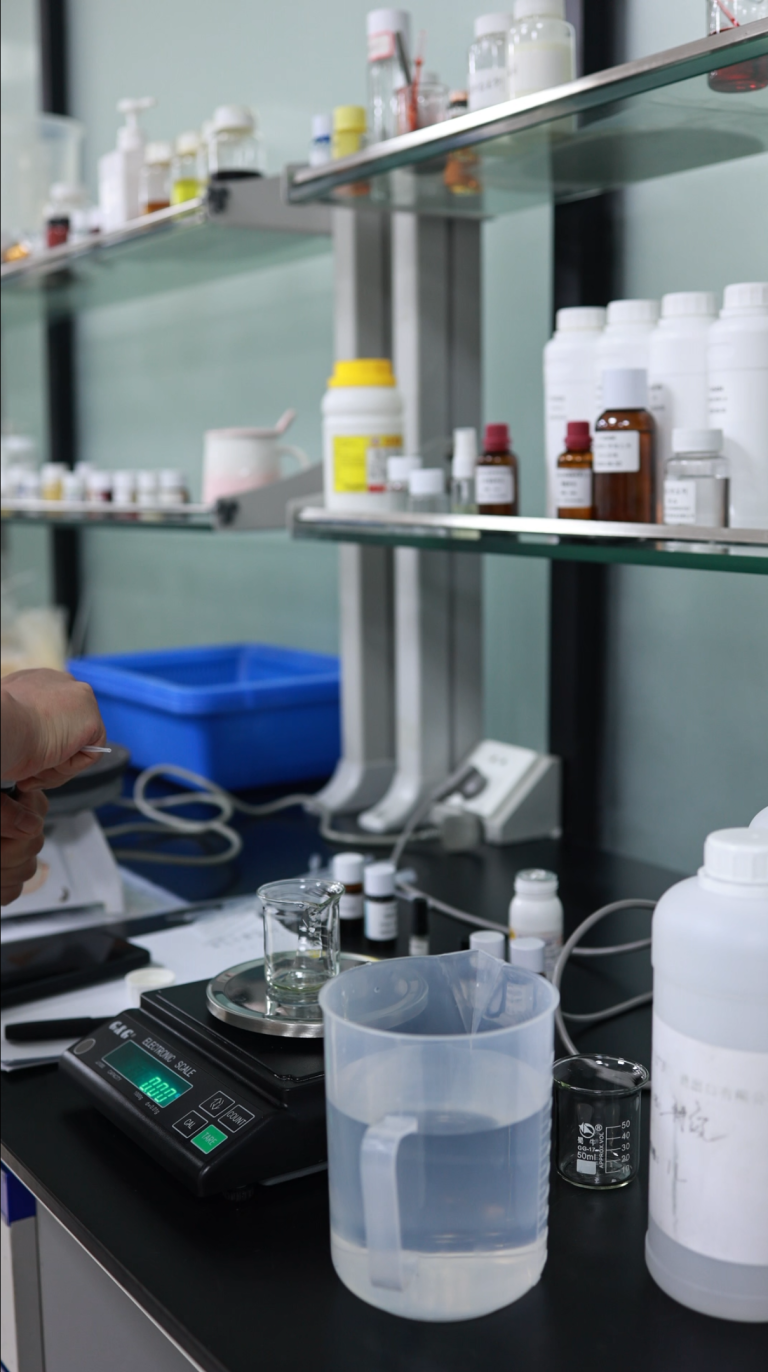
Company process reference
Laboratory weighing and prototype preparation, shown in the company’s cosmetics process library. This is a cosmetics workflow illustration, not a perfume-specific production photograph. The capture date is not verified.
Inside The Factory
Use these gallery views as visual references for project discussion. Confirm the pictured activities, equipment and their relevance to your fragrance project; the gallery alone does not establish verified perfume-specific production capacity.

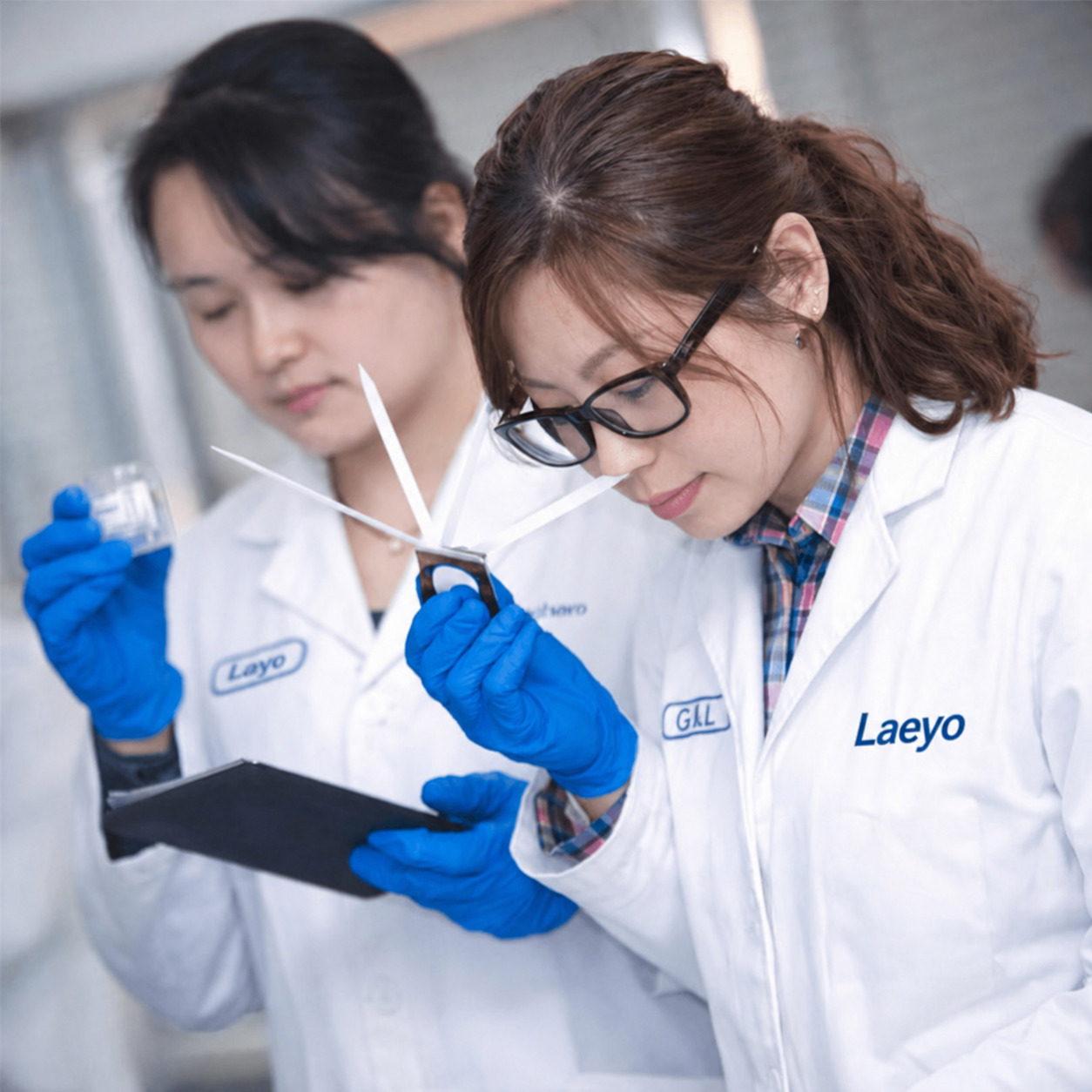


Filling & Assembly
Production communication covers fragrance confirmation, bottle and cap checks, filling, sprayer assembly, label application, box packing, carton marks, and pre-shipment review.
Production & Warehouse
Use these existing gallery images as references for production and storage questions. Confirm the pictured activities, equipment and their relevance to the proposed project; the images do not establish verified perfume-specific capacity or shipment readiness.


Packaging Design Support
Packaging planning can include color direction, material references, bottle appearance, label placement, box structure, and retail presentation before bulk production starts.


Packaging can include bottle selection, cap and sprayer planning, logo labels, color boxes, gift boxes, inserts, sleeves, retail packs, and master cartons.
Export-focused projects should clarify carton quantity, carton marks, packing list needs, commercial invoice details, forwarder communication, and destination requirements.
Quality Nodes
Ask whether a visit or video review can be arranged before making plans. Share the project scope, proposed date and the evidence you want to review; confirm the host, permitted areas, recording restrictions and confidentiality requirements. Access to a line, record or staff member is subject to the agreed arrangements.
| Review topic | Ask to confirm or show, where available |
|---|---|
| Incoming materials | How relevant material and component versions are identified for the proposed project |
| Reference and retained samples | Sample IDs, approved version, storage and reference-handling arrangements |
| Filling and assembly | The proposed line and component combination, project-specific checks and review responsibilities |
| Batch identification | How the applicable product and packing records are connected to the batch reference |
| Storage and packing | Applicable segregation, carton identification, packing version and shipment handover arrangements |
Record the evidence viewed, its scope and any unanswered questions. A photograph, video call or website description alone does not verify total capacity, certification status or the readiness of a particular order.
Factory FAQ
These answers help procurement teams prepare a clearer brief and reduce back-and-forth before sampling or bulk production.
The main production flow begins with incoming inspection and quarantine of fragrance oil, alcohol/denatured solvent, water where permitted, and packaging components. The batch record defines the approved version, weighing tolerance, line clearance, and equipment setting for that SKU. Weighing and batching are double-checked before any mixing begins. The approved formula-specific process may include mixing, a justified rest or maturation step and filtration. Record the purpose, conditions and acceptance criteria; do not assume every formula requires every step or that filtration resolves any haze. Keep bulk liquid on hold until the authorized release decision for filling is recorded; filling and finished-goods release are separate gates. Filling is followed by pump insertion/crimping or capping, labeling, folding carton or cellophane assembly, and date/batch coding. Finished goods are sampled against the approved reference standard, and retention samples are kept for traceability. Processing needs depend on the complete formula and approved method. Product names such as fine fragrance, body mist or perfume oil do not establish a maturation duration or required preparation step. Buyers should request a process flow diagram for their exact SKU during sampling. Technical reading: Perfume Manufacturing Process: From Fragrance Brief to Finished Product.
Start by requesting an equipment list that covers the full production path: compounding and mixing vessels, filtration, storage tanks, filling machines, capping and crimping equipment, labeling and date coding. For alcohol-based fragrance, ask whether electricals and ventilation are rated for flammable solvents and whether the line can achieve your fill volume accuracy and pump torque range. Do not rely on photos alone. Request a live video walk-through or arrange a third-party audit, and compare the equipment list with what is visible on the line. Confirm supporting evidence of operational control, such as calibration records for balances and filling volume checks, maintenance logs, batch record traceability, and operator training for changeovers. The most useful verification is to link equipment to the specific SKU you plan to produce: ask for a line trial or sample run report showing fill weights, crimp depth, spray function, and leak test results. If you need evidence accepted for a specific retailer or regulatory pre-qualification, submit your target market and project details so the supplier can prepare the right document set.
A perfume factory owns or directly controls the formulation lab, compounding, filling, and packaging lines. It can manage raw materials, batch records, stability, and QC in one location. A trading company does not manufacture; it buys from one or more third-party factories and resells to you. This means the factory can usually offer more direct customization, faster technical answers, lower markup, and stronger formulation confidentiality, while a trading company may offer broader sourcing and consolidated small orders but with less control over change management and defect investigation. In daily production, the difference shows up in sampling lead time, bottle-neck and pump compatibility, fragrance strength adjustments, and documentation. A factory can pull a lab sample, adjust viscosity/fill temperature, and coordinate filling and packaging under one roof; a trading company must relay the request and may not be able to guarantee what happened inside production. If your priority is original development, batch-to-batch consistency, and intellectual property protection, work directly with a factory. If you need very small mixed SKU trials and do not have in-market compliance support, a trading company might simplify logistics, but expect less transparency and a higher unit cost. When destination-specific documents or import responsibility affect the choice, submit an inquiry with your target market and project details.
An approved sample is the physical and documented reference that defines exactly which fragrance direction, color, appearance, and packaging version the buyer has accepted. It should be versioned and linked to photographs, retention location, and replacement records; a vague “customer signed the sample” is not enough. This baseline helps reduce ambiguity when reviewing whether bulk production matches the agreed reference. Approval of a lab sample does not automatically mean the formula is ready for 1,000 or 10,000 units. Scaling involves different batch sizes, equipment, mixing, maturation, filtration, filling, and sprayer assembly. The approved sample is the target that the first bulk article and pilot batch must match, but it does not replace the need for a production trial to confirm fragrance strength, color, clarity, spray performance, and packaging behavior at scale. Before bulk production, the factory should compare the approved sample with the pre-production sample and first-off production pieces, then keep batch retains and traceability records. This helps catch drift from raw material version changes or process differences. Buyers should ask how the approved sample will be stored, referenced, and controlled during mass production, and request that any changes be re-approved in writing. Since documentary and regulatory requirements linked to an approved sample can differ by market, share your target market and project details with us for an inquiry. Technical reading: Golden Sample to Bulk Production: How Perfume Consistency Is Controlled.
Start with the legal and physical address. Ask for the business license, export license, and factory name exactly as registered. Compare the company name on the quote, invoice, and bank account. A manufacturer usually operates from one production site and can show the same address on license and audit reports; an intermediary often uses a trading company name and a separate office address. Request a live video walk-through of the production floor, not a pre-recorded tour. Look for active compounding tanks, filling lines, labeling stations, and QC benches. Ask about MOQ drivers, changeover times, and raw material storage. A manufacturer can answer in detail about batch size, line speed, and compliance testing; an intermediary tends to repeat catalog claims and cannot explain production constraints. Ask for sample development workflow and after-sales documents. Manufacturers can issue batch records, CoA, SDS, and sometimes GMP or ISO certificates linked to the factory. They can also confirm whether filling, labeling, and cartoning happen in-house or at sub-contractors. For destination-specific export documents, submit an inquiry with your target market and project details.
Before a large order, buyers should run a structured qualification: request a bench sample, then a pilot batch made on production equipment, not just a lab blend. Review the supplier's capability evidence for batching, maceration/maturation hold time, filling, crimping, capping, labeling, and leak testing. Ask which QA checkpoints apply to the actual formula and closure, with approved methods, units, sampling and criteria for relevant fill, assembly, appearance and fragrance evaluations. Compare retained reference samples against bulk production. Second, lock commercial and technical boundaries before issuing the purchase order. Confirm MOQ drivers for each SKU and packaging component, lead time gates for raw materials, maceration, filling, packaging, and QA release, and what causes rework or delay. Clarify who owns artwork approval, packaging fit, and final label review. Request a pre-production sample and a signed specification sheet with tolerances. Third, protect cash flow and information: use staged payments tied to milestones, obtain NDA and IP ownership terms in writing, and request third-party audit access if needed. Keep an open RFQ record with clear acceptance criteria. Market-sensitive requirements, including product notification, labeling, import, and documentation for the destination market, as well as any certification preferences, must be confirmed through an inquiry with the target market and project details. Technical reading: What European Fragrance Buyers Expect from Manufacturers.
Inquiry
Send your target market, product type, packaging idea, quantity, and launch schedule. We will help clarify the next steps.
Sampling Process
Custom sample development for B2B brand OEM/ODM projects, with scope, fees, and timing confirmed before work begins.
We support B2B brand OEM/ODM projects only, with no own-brand retail products or off-the-shelf stock. Perfume bulk orders start at 1,000 bottles. Contact us to discuss your requirements, budget, and sample development scope.
Share your requirements and expectations, including performance, texture, scent, color, ingredient preferences, packaging, and target market. We will provide an initial consultation and tailored recommendations.
Sample and shipping fees are confirmed before work begins. The sample fee is fully credited toward a bulk order of at least 1,000 bottles. Pricing varies by item, quantity, and shipping destination.
Sample R&D takes approximately 3 days, excluding time spent on client communication and waiting for confirmation, as well as shipping time. Dispatch and delivery timing are confirmed separately. After you receive and test the samples, we will review your feedback and discuss the next steps.