
New Fragrance Brands
Launching an own-brand fragrance range from an initial market and scent brief.
Private Label Perfume Manufacturing
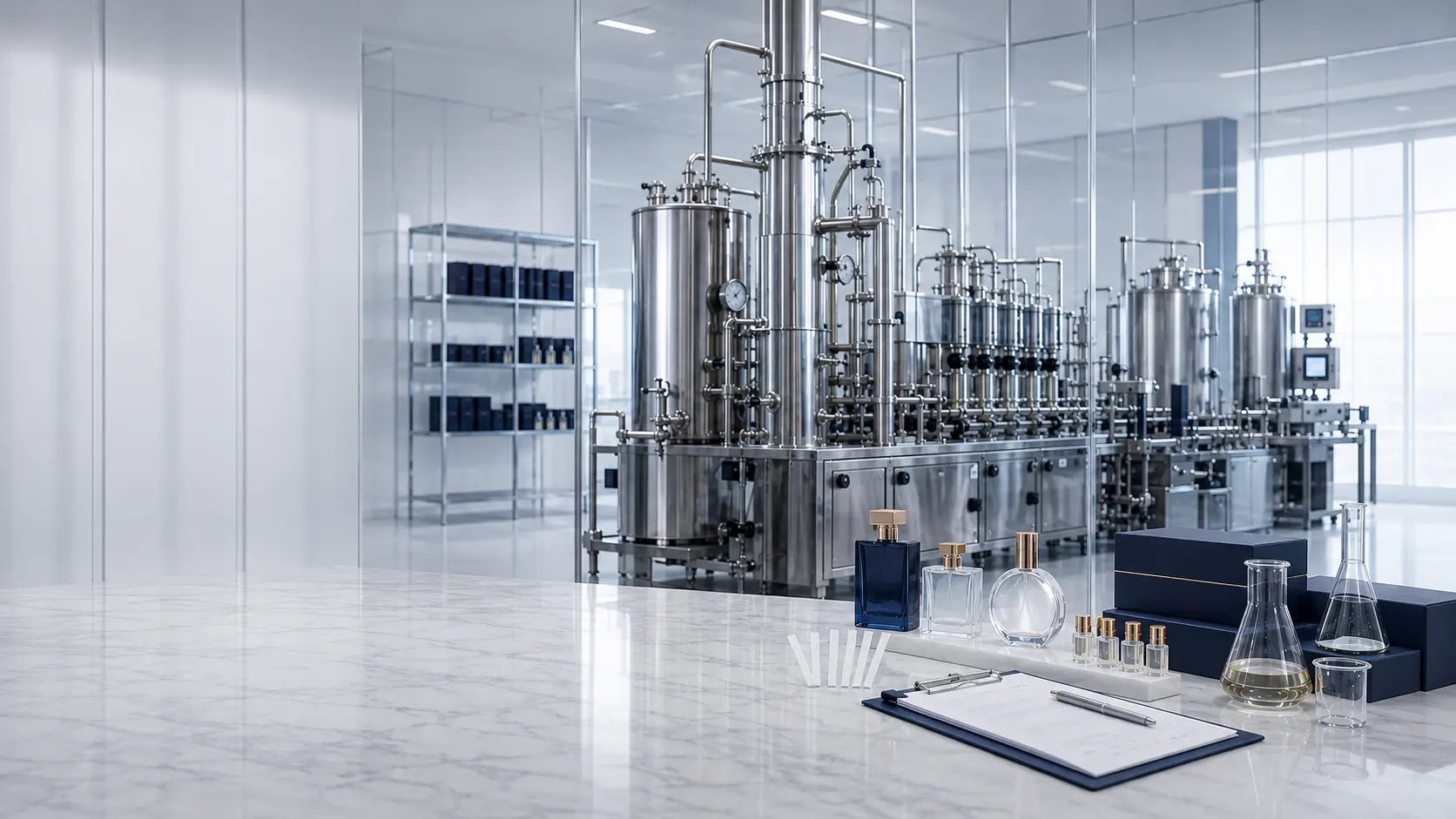
Quick Answer: Private label perfume is a B2B product-development route for launching fragrance under the buyer’s own brand. A project can cover scent direction, bottle and component selection, label and box preparation, samples, filling, packing, quality checkpoints, and export communication.
Start with a Project Brief
Share the intended buyer, scent direction, formula preference, capacity, components, packaging, quantity, destination, and timing. Feasibility, MOQ, sample scope, records, and production scheduling are confirmed by project.
Example project brief
We are planning a 50ml private label perfume for UK DTC sales, with two unisex woody-musk scent directions, an EDP format, a stock glass bottle, custom label and folding box. Estimated quantity is 3,000 units per scent, with samples requested before a Q4 launch.
Direct Definition
Private label perfume is a B2B product-development route for launching fragrance under the buyer’s own brand. A project can cover scent direction, bottle and component selection, label and box preparation, samples, filling, packing, quality checkpoints, and export communication. Final product suitability depends on formula, components, packaging, claims, destination, and the confirmed project scope.
LAEYO works with B2B brands on OEM/ODM fragrance development. Product and packaging references support project discussion; they are not ready-made finished-fragrance stock or evidence of a completed customer order. Use the OEM/ODM service page to agree buyer inputs, development responsibilities and approval points.
Suitable Buyers
Buyer fit depends on the intended audience, market position, channel, budget, and product brief.
Launching an own-brand fragrance range from an initial market and scent brief.
Building market-specific assortments with repeat-order and export requirements.
Developing exclusive-label perfumes for stores, chains, and promotional programs.
Planning focused perfume ranges for online channels and subscription programs.
Extending skincare, cosmetics, or body-care portfolios into fragrance.
Creating branded perfume gifts, sets, and seasonal presentations.
Customization Options
Available combinations depend on technical fit, supplier availability, order scale, target market, and sample review.
Fragrance family, mood, audience, market position, and sample feedback.
EDP, EDT, oil-based, or project-specific direction; final feasibility depends on the project.
30ml / 50ml / 100ml / project-specific
Glass perfume bottles and project-specific formats
Crimp or screw sprayer with cap
Logo, artwork, color direction, label, decoration, and buyer-approved claims.
Folding box, insert, sleeve, gift structure, protective packing, and carton by project.
Packing, carton, shipping-mark, and available document discussion by destination.
Development Directions
Use these directions to shape scent, packaging, audience, channel, and RFQ scope before sampling.
A core fragrance direction built around audience and market position.
A refined route for niche or premium positioning.
A cost-aware route using practical components and packaging.
Compact formats for trial, subscription, and sampling programs.
Giftable fragrance combinations for campaign-led launches.
Product Specifications
Values below describe a planning range. Final specifications require component, formula, artwork, sample, and order confirmation.
| Specification | Planning reference |
|---|---|
| Product Type | Private Label Perfume |
| Common Volume | 30ml / 50ml / 100ml / project-specific |
| Container | Glass perfume bottles and project-specific formats |
| Applicator | Crimp or screw sprayer with cap |
| Formula Direction | EDP, EDT, oil-based, or project-specific direction |
| Fragrance Direction | Category-specific and buyer-led scent directions |
| Branding | Private label artwork and project-specific decoration |
| Packaging | Label, box, insert, gift structure, protective packing, and carton as applicable |
| Sample Route | Discussed before production according to project scope |
| MOQ | Perfume bulk orders start at 1,000 bottles; other product formats and final project requirements are reviewed separately |
| Use Scenario | New Fragrance Brands, Importers & Distributors, Retailers, E-commerce Sellers, Beauty Brands, Gift Companies |
Packaging Options
Glass perfume bottles and project-specific formats. Component availability and formula compatibility require confirmation.
Crimp or screw sprayer with cap. Assembly, function, and leakage-risk checks depend on the selected component.
Color, coating, printing, label material, artwork, placement, and buyer-approved claims can be reviewed by project.
Folding box, insert, sleeve, gift structure, protective packing, carton quantity, and shipping mark as applicable.
OEM/ODM Manufacturing Support
Align product, market, scent, quantity, packaging, and requested support.
Develop or review a direction against the agreed project brief.
Confirm available bottle, applicator, decoration, label, and box routes.
Use confirmed samples and project records as production references.
Plan filling, capping, spraying, labeling, packing, and applicable checkpoints.
Review appearance, function, packing, and project-specific records.
Discuss packing information, files, shipping marks, and buyer or forwarder requirements.
Project Process
Buyer shares product, market, quantity, scent, packaging, and timing needs.
Review feasibility, component direction, sample route, and information gaps.
Prepare the agreed scent or product reference according to project scope.
Confirm container, applicator, artwork, box, and protective packing direction.
Record buyer feedback and confirm relevant sample and packaging references.
Coordinate materials, scheduling, artwork, files, and order details.
Complete applicable filling, assembly, packing, and quality checkpoints.
Review cartons, shipping marks, available documents, and handover information.
Quality Control
Checkpoints help align the approved sample, components, artwork, packaging, production records, and shipment preparation.
Compare applicable production details with confirmed project references.
Review color, clarity, visible condition, and presentation where applicable.
Check filling information and visible fill consistency using the project method.
Review crimp or screw sprayer with cap function and assembly risk.
Review closure, assembly, handling, and packing conditions without claiming zero leakage.
Check the confirmed version, placement, legibility, and visible application.
Review box, insert, protection, quantity, and visible packing condition.
Record availability and format depend on the order and agreed inspection scope.
Sample Development
Sample scope can include scent, formula direction, color or appearance, component fit, artwork, and packaging references according to the project.
MOQ Planning
Perfume bulk orders start at 1,000 bottles. Other product formats and final project requirements are reviewed separately, including components, packaging, scent count, and production setup.
Buyer Checklist
More complete input helps identify missing decisions and prepare a project-specific discussion.
Send Your RequirementsApplication Scenarios
Launching an own-brand fragrance range from an initial market and scent brief.
Building market-specific assortments with repeat-order and export requirements.
Developing exclusive-label perfumes for stores, chains, and promotional programs.
Planning focused perfume ranges for online channels and subscription programs.
Extending skincare, cosmetics, or body-care portfolios into fragrance.
Creating branded perfume gifts, sets, and seasonal presentations.
Project Planning Example
A buyer may begin with one target market, a defined audience, one or two scent directions, an available container route, private label artwork, and project-specific packaging. The team can then discuss sampling, component confirmation, production preparation, checkpoints, and export information.
Use this as an RFQ planning model; final MOQ, timing, price, and documentation are confirmed by project scope.
Frequently Asked Questions
Answers describe a B2B planning framework; final scope depends on the confirmed project.
Before approving a fragrance shipment, start with the finished product release file. Confirm the Certificate of Analysis (COA) matches the approved specification for appearance, odor, color, clarity, net content, and any agreed sensory parameters. Review the Safety Data Sheet (SDS) and Technical Data Sheet (TDS) for the exact formula and batch, and check that the batch number on all documents matches the cartons and labels. Then verify production evidence. Ask for raw material incoming inspection records, weighing/compounding and blending/maturation/filtration logs, semi-finished product test results, first-article and in-process inspection records, filling volume checks, spray and seal/closure leak tests, packaging first-article sign-off, and finished product inspection report. Retained sample references and deviation/CAPA closure should be available for the batch. If the product is subject to destination-specific requirements, additional market or retailer-specific documents may apply. For your shipment approval package, request a signed release record showing quality, production, and warehouse status. Because documentation sets can vary by market, channel, and product classification, submit an inquiry with your target market, SKU list, and launch details so our QA team can send the applicable pre-shipment checklist.
For a U.S. cosmetic fragrance project, identify the responsible person from the manufacturer, packer or distributor named on the product label. Review which facility-registration and product-listing duties apply, including any applicable exemptions; a project agreement should not imply that statutory duties can simply be reassigned. FDA registration and listing numbers do not mean that FDA has approved a facility or product, and FDA does not issue certificates verifying cosmetic registration or listing compliance. Before finalizing your project, have the responsible parties review safety substantiation, adverse-event handling, labeling and any other requirements for the actual formula, intended use and market. Confirm what information each party will provide and which approvals remain outstanding. Start with FDA’s registration and listing guidance, then share your target market, product format and planned claims for a project-specific review.
A perfume factory owns or directly controls the formulation lab, compounding, filling, and packaging lines. It can manage raw materials, batch records, stability, and QC in one location. A trading company does not manufacture; it buys from one or more third-party factories and resells to you. This means the factory can usually offer more direct customization, faster technical answers, lower markup, and stronger formulation confidentiality, while a trading company may offer broader sourcing and consolidated small orders but with less control over change management and defect investigation. In daily production, the difference shows up in sampling lead time, bottle-neck and pump compatibility, fragrance strength adjustments, and documentation. A factory can pull a lab sample, adjust viscosity/fill temperature, and coordinate filling and packaging under one roof; a trading company must relay the request and may not be able to guarantee what happened inside production. If your priority is original development, batch-to-batch consistency, and intellectual property protection, work directly with a factory. If you need very small mixed SKU trials and do not have in-market compliance support, a trading company might simplify logistics, but expect less transparency and a higher unit cost. When destination-specific documents or import responsibility affect the choice, submit an inquiry with your target market and project details.
It can include fragrance direction, formula discussion, bottle selection, label design, packaging, filling, QC, and export document coordination.
Private label perfume manufacturing means developing and producing perfume for a buyer’s brand. Laeyo serves B2B brand OEM/ODM projects; we do not operate our own consumer retail brand or sell ready-made finished fragrances from stock. The products shown on this website are development references. Share your fragrance direction, intended format, target market, planned SKU breakdown, packaging preferences and timing so that the project requirements can be reviewed. Confirm the development scope, samples, packaging decisions and approval responsibilities for your project. Formula use rights, artwork ownership, exclusivity and change responsibilities should be agreed specifically rather than inferred from the phrase “private label”. Laeyo’s perfume MOQ is 1,000 bottles, without an assumed minimum allocation per fragrance or SKU. Approximate sample R&D is three days, excluding customer communication, confirmation waiting and shipping. These planning terms do not establish a guaranteed launch date or the specifications of a ready-made product.
Ask a manufacturer to define the services and deliverables included in your project. Use your brief to discuss fragrance development, sample review, packaging coordination, production, quality checks and shipment preparation, then record what is included, excluded or still pending. For each stage, confirm the buyer input, the expected deliverable, the responsible reviewer and the approval needed before moving on. Request relevant evidence for a claimed capability instead of assuming that a large formula library, a particular test or a faster launch is part of every project. Confirm the specific documents and review responsibilities for your intended product and target market. Do not treat a generic list of certificates or a supplier’s service description as proof that a particular formula, package or market requirement has been satisfied. Laeyo supports B2B brand OEM/ODM projects without ready-made finished fragrance stock or its own retail brand. Discuss your planned format, SKU breakdown, packaging and timing to confirm the actual scope. Formula and artwork rights, exclusivity and change responsibilities should be agreed explicitly for the project.
Related Product Categories
Related Guides
Fragrance buyers rarely ...
Read guideFor US and European frag...
Read guideProject Evidence & Related Support
Start Your Project
Share your audience, market, scent, formula, capacity, packaging, quantity, destination, and timing so the project scope can be reviewed.
Sampling Process
Custom sample development for B2B brand OEM/ODM projects, with scope, fees, and timing confirmed before work begins.
We support B2B brand OEM/ODM projects only, with no own-brand retail products or off-the-shelf stock. Perfume bulk orders start at 1,000 bottles. Contact us to discuss your requirements, budget, and sample development scope.
Share your requirements and expectations, including performance, texture, scent, color, ingredient preferences, packaging, and target market. We will provide an initial consultation and tailored recommendations.
Sample and shipping fees are confirmed before work begins. The sample fee is fully credited toward a bulk order of at least 1,000 bottles. Pricing varies by item, quantity, and shipping destination.
Sample R&D takes approximately 3 days, excluding time spent on client communication and waiting for confirmation, as well as shipping time. Dispatch and delivery timing are confirmed separately. After you receive and test the samples, we will review your feedback and discuss the next steps.